Select processor 1
Select processor 2
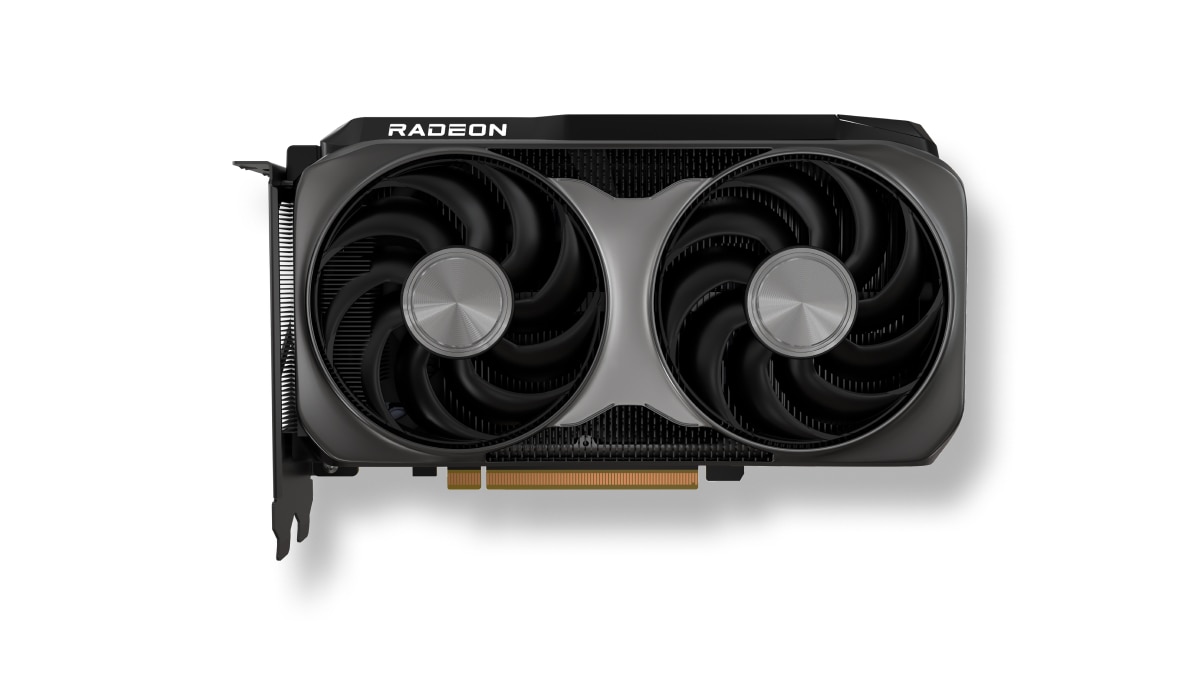
AMD Radeon RX 7600
NVIDIA GeForce GTX 1660 Ti

AMD Radeon RX 7600 vs NVIDIA GeForce GTX 1660 Ti. Specifications

User rating
star star star star star
Released
Q2/2023
AMD Radeon RX 7600
AMD Radeon RX 7600
Released
Q3/2019
User rating
star star star star star
NVIDIA GeForce GTX 1660 Ti

What's the best choice AMD Radeon RX 7600 or NVIDIA GeForce GTX 1660 Ti? Which graphics card is faster?

Compare the available specifications of these models.

AMD Radeon RX 7600 has a base frequency of 1.720 GHz. Memory size 8 GB. Memory type GDDR6. Released in Q2/2023.

NVIDIA GeForce GTX 1660 Ti has a base frequency of 1.5 GHz. Memory size 6 GB. Memory type GDDR6. Released in Q3/2019.

Differences

  • Higher clock speed

    Around 15% better clock speed

    1.720 GHz left arrow 1.5 GHz
  • More memory

    33% more memory

    8 GB left arrow 6 GB

Positions in all rankings

Common positions AMD Radeon RX 7600 GPU in popular benchmarks, for comparison with other models.

  • FP32 Performance (Single-precision TFLOPS)
    442 place

Positions in all rankings

Common positions NVIDIA GeForce GTX 1660 Ti GPU in popular benchmarks, for comparison with other models.

No data

Specifications

Technical data
AMD Radeon RX 7600 AMD Radeon RX 7600
NVIDIA GeForce GTX 1660 Ti NVIDIA GeForce GTX 1660 Ti
General info

Comparison of basic technical data of graphics cards AMD Radeon RX 7600 and NVIDIA GeForce GTX 1660 Ti, chip, information processing units.

  • AI Accelerators
    64 left arrow -
  • Architecture
    RDNA 3 left arrow Turing
  • Based on
    AMD Radeon RX 7600 left arrow -
  • Compute Units
    32 left arrow -
  • Execution Units
    32 left arrow 1536
  • GPU Chip
    Navi 33 XL left arrow TU116
  • Ray Accelerators
    32 left arrow -
  • Render Output Units
    64 left arrow 48
  • RT Cores
    32 left arrow -
  • Shader
    2048 left arrow -
  • Streaming Multiprocessors
    32 left arrow -
  • Texture Units
    128 left arrow 96
  • CUDA Cores
    - left arrow 1536
  • L1 Cache
    - left arrow 64 KB
  • L2 Cache
    - left arrow 1,536 MB
Memory settings

Video memory capacity, type, bus width and bandwidth describe different properties. These values alone do not determine graphics performance.

  • Infinity Cache
    32 MB left arrow -
  • Memory Bandwidth
    288 GB/s left arrow 288 GB/s
  • Memory Bus
    128 bit left arrow 192 bit
  • Memory Clock
    2250 MHz left arrow 1500 MHz
  • Memory Data Rate
    18 Gbps left arrow 12 Gbps
  • Memory Size
    8 GB left arrow 6 GB
  • Memory Type
    GDDR6 left arrow GDDR6
Clock frequency

Published GPU clock frequencies describe different operating modes. Clock speed alone does not determine graphics performance.

  • Base Clock
    1720 MHz left arrow 1500 MHz
  • Boost Clock
    2655 MHz left arrow 1770 MHz
  • Game Clock
    2250 MHz left arrow -
  • Overclocking
    Yes left arrow -
Thermal Management

Graphics card power limits and recommended system power supply describe different specifications.

  • Maximum Junction Temperature
    - left arrow -
  • System Power Supply
    550 W (System power requirement) left arrow 450 W (Minimum system power requirement)
  • TDP
    165 W (Reference) left arrow 120 W
  • TDP (up)
    - left arrow -
  • Typical Board Power
    165 W left arrow -
  • Graphics Card Power
    - left arrow 120 W
  • Maximum GPU Temperature
    - left arrow 95 °C
Cooler & Fans type

Types and sizes of coolers for graphics card cooling system AMD Radeon RX 7600 and NVIDIA GeForce GTX 1660 Ti.

  • Cooler-Type
    Air cooling left arrow -
  • Fan-Type
    Axial left arrow -
  • Fan 1
    2 x 80 mm left arrow -
  • Fan 2
    - left arrow -
  • Noise (Idle)
    0 dB / Silent left arrow -
  • Noise (Load)
    - left arrow -
Interfaces

Connectivity and connections.

  • DisplayPort Ports
    3 × DisplayPort 2.1 left arrow 1 × DisplayPort 1.4a
  • DisplayPort Version
    Up to 2.1 left arrow -
  • DVI Ports
    - left arrow 1 × DVI
  • HDCP Version
    2.3 left arrow -
  • HDMI Ports
    1 × HDMI 2.1a left arrow 1 × HDMI 2.1
  • HDMI Version
    2.1 left arrow -
  • Max. Displays
    4 left arrow 3
  • PCIe Interface
    PCIe 4.0 x8 left arrow PCIe 3.0 x16
  • Power Connectors
    1x8-Pin left arrow 8-pin
  • USB-C Ports
    - left arrow -
  • VGA Ports
    - left arrow -
  • Other Display Outputs (unparsed)
    - left arrow DP 1.4a; HDMI 2.0b; DL-DVI-D
Technical data

Technical data that is used to its full potential in computer games.

  • DirectX
    12_2 (Ultimate) left arrow 12.1
  • DLSS / FSR
    Yes left arrow -
  • LED
    No LED lighting left arrow -
  • Max. resolution
    7680 × 4320 left arrow 3840 × 2160
  • Raytracing
    Yes left arrow -
  • CUDA
    - left arrow 7.5
  • OpenCL
    - left arrow 3.0
  • OpenGL
    - left arrow 4.6
  • Shader Model
    - left arrow 6.7 (6.4)
  • Vulkan
    - left arrow 1.3
Supported Video Codecs

Built-in support for video and image compression standards.

  • AV1
    Decode / Encode left arrow -
  • h264
    Decode / Encode left arrow -
  • h265 / HEVC
    Decode / Encode left arrow -
  • VP8
    Decode / Encode left arrow -
  • VP9
    Decode / Encode left arrow -
Dimensions

The difference in size, weight and slot of the compared devices

  • Height
    115 mm left arrow 35 mm
  • Length
    204 mm left arrow 229 mm
  • Slot Size
    2 PCIe-Slots left arrow Dual-slot
  • Weight
    - left arrow -
  • Width
    - left arrow 111 mm
More information

Comparison of interfaces and release dates for GPU NVIDIA GeForce GTX 1660 Ti and AMD Radeon RX 7600.

  • Documents
    data sheet left arrow -
  • Launch Price (historical)
    269 $ (Reference) left arrow -
  • Part Number
    - left arrow -
  • Process Technology
    6 nm left arrow 12 nm
  • Release date
    Q2/2023 left arrow Q1/2019
  • Verification scope
    Explicit manufacturer fields refreshed; other original historical fields retained, not all reverified. Partial composite conflicts are preserved. left arrow Explicit manufacturer fields refreshed; other original historical fields retained, not all reverified. Partial composite conflicts are preserved.
  • Manufacturer specification scope
    - left arrow NVIDIA Founders Edition/reference design. Clock specifications apply to gaming use. AIB shipping specifications and complete-system power needs may differ.
  • Multi-monitor support
    - left arrow Yes
Theoretical Performance

  • FP16 (theoretical)
    43.50 TFLOPS (2:1) left arrow 10.87 TFLOPS (2:1)
  • FP32 (theoretical)
    21.75 TFLOPS left arrow 5.437 TFLOPS
  • FP64 (theoretical)
    679.7 GFLOPS (1:32) left arrow 169.9 GFLOPS (1:32)
  • Pixel Rate
    169.9 GPixel/s left arrow 84.96 GPixel/s
  • Texture Rate
    339.8 GTexel/s left arrow 169.9 GTexel/s

Benchmarks

Performance tests GPUs

No comparable benchmark results are available yet. Specifications alone do not determine which model is faster.

These are saved results from the earlier catalog. Measurement dates and test configurations were not recorded. Models with no comparable results are omitted.

Recent models: test results with identified primary sources — Game frame rates

Latest comparisons