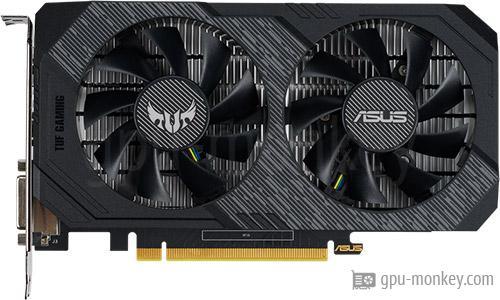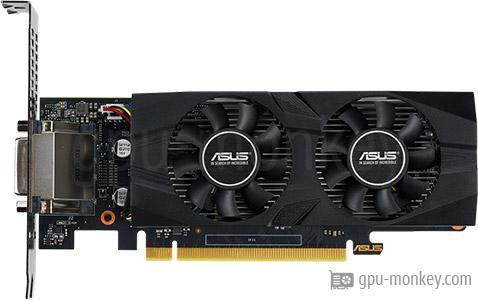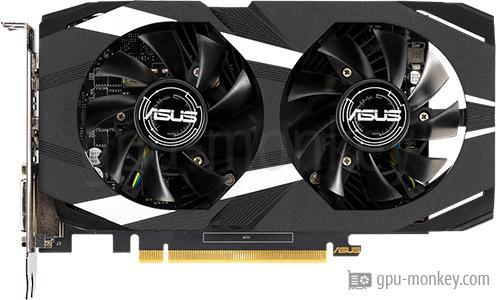
Common positions ASUS Phoenix GeForce GTX 1650 GPU in popular benchmarks, for comparison with other models.
Published results: 5
Each row uses one game, resolution, test suite and graphics mode.
| Test and settings | ASUS Phoenix GeForce GTX 1650 |
|---|---|
| Gaming suite 2019 / Far Cry 5 / 1920x1080 / Maximum settings / Rendering unreported | 49.5 FPS Base GPU test: Nvidia GeForce GTX 1650 VRAM: 4 GBMemory type: GDDR5Test CPU: Intel Core i7-8700KSystem RAM: 32 GB DDR4-3200 16-16-16-38-1T (dual-rank)OS: Windows 10 1809Graphics API: DirectX 11Driver: 430.39 |
| Gaming suite 2019 / Hellblade: Senua's Sacrifice / 1920x1080 / Maximum settings / Rendering unreported | 43.8 FPS Base GPU test: Nvidia GeForce GTX 1650 VRAM: 4 GBMemory type: GDDR5Test CPU: Intel Core i7-8700KSystem RAM: 32 GB DDR4-3200 16-16-16-38-1T (dual-rank)OS: Windows 10 1809Graphics API: DirectX 11Driver: 430.39 |
| Gaming suite 2019 / Kingdom Come: Deliverance / 1920x1080 / Maximum settings / Rendering unreported | 33.9 FPS Base GPU test: Nvidia GeForce GTX 1650 VRAM: 4 GBMemory type: GDDR5Test CPU: Intel Core i7-8700KSystem RAM: 32 GB DDR4-3200 16-16-16-38-1T (dual-rank)OS: Windows 10 1809Graphics API: DirectX 11Driver: 430.39 |
| Gaming suite 2019 / Shadow of the Tomb Raider / 1920x1080 / Maximum settings / Rendering unreported | 34.5 FPS Base GPU test: Nvidia GeForce GTX 1650 VRAM: 4 GBMemory type: GDDR5Test CPU: Intel Core i7-8700KSystem RAM: 32 GB DDR4-3200 16-16-16-38-1T (dual-rank)OS: Windows 10 1809Graphics API: DirectX 12Driver: 430.39 |
| Gaming suite 2019 / Overwatch / 1920x1080 / Maximum settings / Rendering unreported | 72.8 FPS Base GPU test: Nvidia GeForce GTX 1650 VRAM: 4 GBMemory type: GDDR5Test CPU: Intel Core i7-8700KSystem RAM: 32 GB DDR4-3200 16-16-16-38-1T (dual-rank)OS: Windows 10 1809Graphics API: DirectX 11Driver: 430.39 |
A base GPU test is a reference for cards using that GPU and the same memory capacity. Board overclocking, cooling and power limits can change the result.
Compare the scores of popular benchmarks ASUS Phoenix GeForce GTX 1650 with other graphics cards to understand the real speed of the GPU when processing content.
Tests include working with floating point, creating 3D models, mining cryptocurrencies.
These are saved results from the earlier catalog. Measurement dates and test configurations were not recorded. Models with no comparable results are omitted.
Recent models: test results with identified primary sources — Game frame rates
Archived results. The original measurement method and test conditions have not been verified.
Higher values are better in this metric.
Higher values are better in this metric.
Higher values are better in this metric.
Higher values are better in this metric.
Higher values are better in this metric.
These are saved results from the earlier catalog. Measurement dates and test configurations were not recorded. Models with no comparable results are omitted. Index 0–100: equal-weight mean of each score relative to the best saved score among models with both tests. Tests: Battlefield 5 + Shadow of the Tomb Raider. This index does not predict performance in every workload.
Recent models: test results with identified primary sources — Game frame rates
*
Base Clock is the base GPU frequency stated by the manufacturer for this model.
Boost Clock describes automatic frequency increases. Actual clock speed varies with workload, temperature and power limits; it is not a guarantee of manual overclocking.


 Russian
 German
 Portuguese
 Italian
 French
 Japan
Japan Spanish
 Polish
 Chinese
 Korean