Select processor 1
Select processor 2
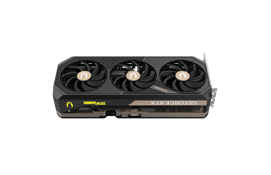
NVIDIA H100 SXM5
NVIDIA GeForce RTX 3080 Ti Max-Q

NVIDIA H100 SXM5 vs NVIDIA GeForce RTX 3080 Ti Max-Q. Specifications

User rating
star star star star star
Released
Q2/2022
NVIDIA H100 SXM5
NVIDIA H100 SXM5
Released
Q1/2022
User rating
star star star star star
NVIDIA GeForce RTX 3080 Ti Max-Q

What's the best choice NVIDIA H100 SXM5 or NVIDIA GeForce RTX 3080 Ti Max-Q? Which graphics card is faster?

Compare the available specifications of these models.

NVIDIA H100 SXM5 has a base frequency of 1.065 GHz. Memory size 80 GB. Memory type HBM3. Released in Q2/2022.

NVIDIA GeForce RTX 3080 Ti Max-Q has a base frequency of 0.6 GHz. Memory size 16 GB. Memory type GDDR6. Released in Q1/2022.

Differences

Videokards Reasons to consider
NVIDIA H100 SXM5
Report a bug
  • Higher clock speed

    Around 78% better clock speed

    1.065 GHz left arrow 0.6 GHz
  • More memory

    400% more memory

    80 GB left arrow 16 GB

Specifications

Technical data
NVIDIA H100 SXM5 NVIDIA H100 SXM5
NVIDIA GeForce RTX 3080 Ti Max-Q NVIDIA GeForce RTX 3080 Ti Max-Q
General info

Comparison of basic technical data of graphics cards NVIDIA H100 SXM5 and NVIDIA GeForce RTX 3080 Ti Max-Q, chip, information processing units.

  • Architecture
    Hopper left arrow Ampere
  • Execution Units
    8448 left arrow 7424
  • GPU Chip
    GH100 left arrow GN20-E8-A1
  • L1 Cache
    192 KB left arrow -
  • L2 Cache
    50 MB left arrow -
  • Render Output Units
    24 left arrow 96
  • Texture Units
    528 left arrow 232
  • Based on
    - left arrow GA103S
Memory settings

Video memory capacity, type, bus width and bandwidth describe different properties. These values alone do not determine graphics performance.

  • Memory Bandwidth
    1,920 GB/s left arrow 384 GB/s
  • Memory Bus
    5120 bit left arrow 256 bit
  • Memory Clock
    1500 MHz left arrow -
  • Memory Data Rate
    3 Gbps left arrow -
  • Memory Size
    80 GB left arrow 16 GB
  • Memory Type
    HBM3 left arrow GDDR6
  • Memory Speed (legacy frequency label)
    - left arrow 1500 MHz
Clock frequency

Published GPU clock frequencies describe different operating modes. Clock speed alone does not determine graphics performance.

  • Base Clock
    1065 MHz left arrow 600 MHz
  • Boost Clock
    1780 MHz left arrow 1125 MHz
  • Overclocking
    - left arrow No
Thermal Management

Graphics card power limits and recommended system power supply describe different specifications.

  • Board Number
    PG520 left arrow -
  • System Power Supply
    1100 W (PSU recommendation) left arrow -
  • TDP
    700 W left arrow 80 W
Interfaces

Connectivity and connections.

  • Max. Displays
    1 left arrow -
  • PCIe Interface
    PCIe 5.0 x16 left arrow PCIe 4.0 x16
  • Power Connectors
    8-pin EPS left arrow No
Technical data

Technical data that is used to its full potential in computer games.

  • CUDA
    9.0 left arrow -
  • DirectX
    No left arrow 12_2
  • Max. resolution
    3840x2160@60Hz left arrow 7680 × 4320
  • OpenCL
    3.0 left arrow 3.0
  • OpenGL
    No left arrow 4.6
  • Shader Model
    No left arrow 6.5
  • Vulkan
    No left arrow 1.3
More information

Comparison of interfaces and release dates for GPU NVIDIA GeForce RTX 3080 Ti Max-Q and NVIDIA H100 SXM5.

  • Process Technology
    4 nm left arrow 8 nm
  • Release date
    Q2/2022 left arrow -
Theoretical Performance

  • FP16 (theoretical)
    120.3 TFLOPS left arrow 16.7 TFLOPS
  • FP32 (theoretical)
    30.07 TFLOPS left arrow 16.7 TFLOPS
  • FP64 (theoretical)
    15.04 TFLOPS left arrow 0.261 TFLOPS
  • Pixel Rate
    42.72 GPixel/s left arrow 108.0 GPixel/s
  • Texture Rate
    939.8 GTexel/s left arrow 261.0 GTexel/s

Benchmarks

Performance tests GPUs

No comparable benchmark results are available yet. Specifications alone do not determine which model is faster.

Latest comparisons