Select processor 1
Select processor 2
AMD Radeon Pro VII
Select video card 2
User rating
star star star star star
Released
Q1/2019
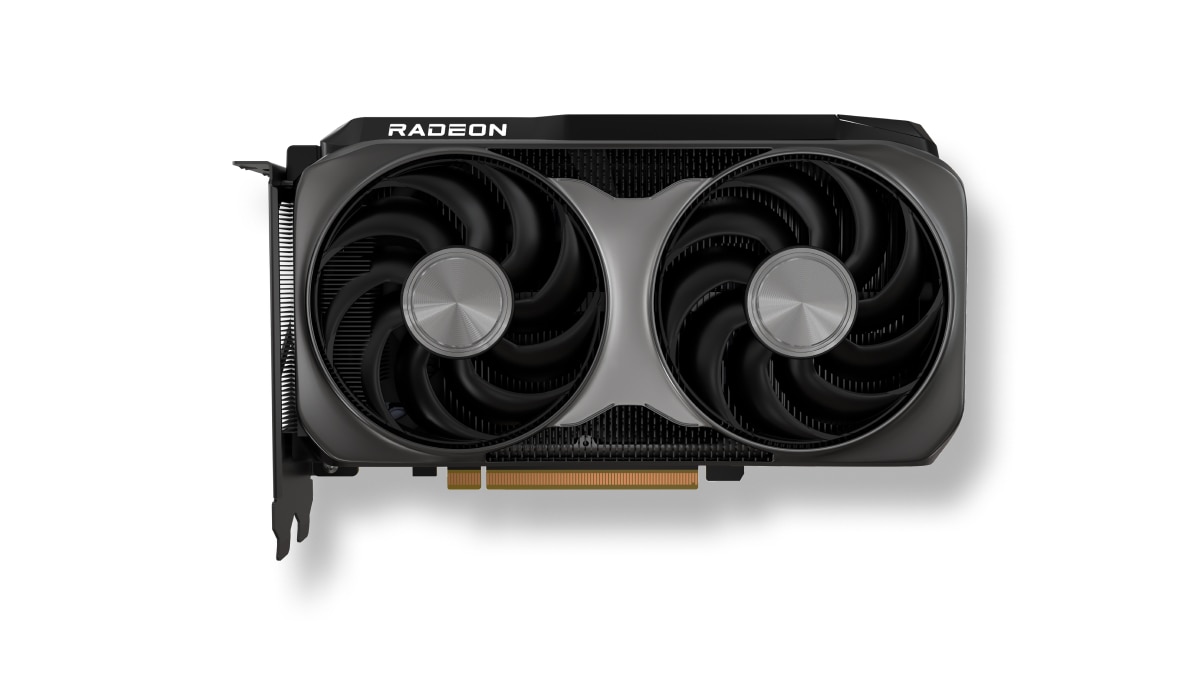
AMD Radeon Pro VII

Graphics card AMD Radeon Pro VII, specifications and benchmarks

1046 place in the overall ranking Graphics Cards!
It is a detailed review of AMD Radeon Pro VII, the date of manufacture started in Q1/2019. Here are all specifications and the results of performance in the form of modern benchmark estimations. The base clock frequency is 1.400 GHz. The GPU supports HBM2 with an 16 GB graphics memory. TDP is 250 W-17 %. We recommend comparing the GPU with other models on our website to determine the best performance.

Specifications

Technical data
GPU
  • Based on
    AMD Radeon VII
  • Execution Units
    60
  • GPU Chip
    Vega 20 XT
  • Render Output Units
    64
  • Shader
    3840
  • Texture Units
    240
Memory
  • Memory Bandwidth
    1024 GB/s
  • Memory Bus
    4096 bit
  • Memory Size
    16 GB
  • Memory Speed (legacy frequency label)
    1000 MHz
  • Memory Type
    HBM2
Clock Speeds
  • Base Clock
    1400 MHz
  • Boost Clock
    1.700 GHz-3 %
  • Game Clock
    —
  • Overclocking
    Yes
Thermal Design
  • Maximum Junction Temperature
    —
  • TDP
    250 W-17 %
  • TDP (up)
    —
Cooler & Fans
  • Cooler-Type
    Air cooling
  • Fan-Type
    Radial
  • Fan 1
    1 x 75 mm
  • Fan 2
    —
  • Noise (Idle)
    42 dB
  • Noise (Load)
    58 dB
Connectivity
  • DisplayPort Ports
    6 × DisplayPort 1.4a
  • DVI Ports
    —
  • HDCP Version
    —
  • HDMI Ports
    —
  • Max. Displays
    4
  • PCIe Interface
    PCIe 3.0 x16
  • Power Connectors
    1 x 6-Pin, 1 x 8-Pin
  • USB-C Ports
    —
  • VGA Ports
    —
Featureset
  • DirectX
    12_1
  • DLSS / FSR
    No
  • LED
    No LED lighting
  • Max. resolution
    7680 × 4320
  • Raytracing
    No
Supported Video Codecs
  • AV1
    No
  • h264
    Decode / Encode
  • h265 / HEVC
    Decode / Encode
  • VP8
    Decode
  • VP9
    Decode / Encode
Dimensions
  • Height
    130 mm
  • Length
    283 mm
  • Slot Size
    2 PCIe-Slots
  • Weight
    —
  • Width
    40 mm
Additional data
  • Documents
    data sheet
  • Launch Price (historical)
    —
  • Part Number
    RX-VEGMA3FD6
  • Process Technology
    7 nm
  • Release date
    Q1/2019
Positions in all rankings

Common positions AMD Radeon Pro VII GPU in popular benchmarks, for comparison with other models.

  • FP32 Performance (Single-precision TFLOPS)
    991 place
  • 3DMark Benchmark
    1699 place
  • Battlefield 5
    1114 place
  • Shadow of the Tomb Raider
    1038 place
  • Crypto-Mining Ethereum Hashrate (MH/s)
    168 place
  • Crypto-Mining Ergo Hashrate (MH/s)
    155 place
  • Crypto-Mining Ravencoin Hashrate (MH/s)
    485 place
  • Crypto-Mining Vertcoin Hashrate (MH/s)
    300 place

Benchmarks

Performance tests GPU

Compare the scores of popular benchmarks AMD Radeon Pro VII with other graphics cards to understand the real speed of the GPU when processing content.

Tests include working with floating point, creating 3D models, mining cryptocurrencies.

These are saved results from the earlier catalog. Measurement dates and test configurations were not recorded. Models with no comparable results are omitted.

Recent models: test results with identified primary sources — Game frame rates

Archive: saved catalog source links. The original measurement method and test conditions have not been verified; current source pages may differ from the imported content. AMD Radeon Pro VII

FP32 Performance (Single-precision TFLOPS)
Benchmark FP32 is a 32-bit floating point calculation for the GPU which is required for 3D gaming

Higher values are better in this metric.

3DMark Benchmark
3DMark is designed for gamers, overclockers and system builders who want to get the most out of their hardware

Higher values are better in this metric.

Battlefield 5
Battlefield 5 is a realistic game, with a built-in benchmark, very suitable as a test for graphics cards

Higher values are better in this metric.

Shadow of the Tomb Raider
Shadow of the Tomb Raider has a built-in benchmark, based on the Crystal Dynamics Foundation engine

Higher values are better in this metric.

Crypto-Mining Ethereum Hashrate (MH/s)
Ethash is an algorithm for mining Ethereum cryptocurrency that makes the most of the GPU

Higher values are better in this metric.

Crypto-Mining Ergo Hashrate (MH/s)
The Autolykos algorithm, on which Ergo cryptocurrency is based, allows not only modern GPUs to be used for mining, but also the past generation of GPUs

Higher values are better in this metric.

Crypto-Mining Ravencoin Hashrate (MH/s)
Hashrate mining Ravencoin cryptocurrency on the KawPoW algorithm is fastest on modern video cards

Higher values are better in this metric.

Crypto-Mining Vertcoin Hashrate (MH/s)
VertCoin cryptocurrency can be mined on both Nvidia and AMD and is interesting because it mines perfectly on old GPUs like GTX1050, R9 290 and even GTX970

Higher values are better in this metric.

Synonyms

Nearby models in the composite benchmark index.

These are saved results from the earlier catalog. Measurement dates and test configurations were not recorded. Models with no comparable results are omitted. Index 0–100: equal-weight mean of each score relative to the best saved score among models with both tests. Tests: Battlefield 5 + Shadow of the Tomb Raider. This index does not predict performance in every workload.

Recent models: test results with identified primary sources — Game frame rates

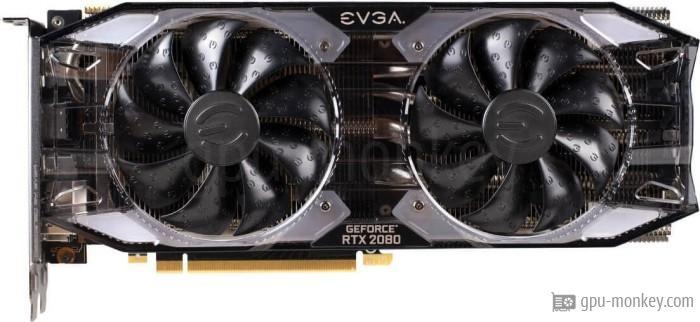
EVGA GeForce RTX 2080 XC ULTRA EVGA GeForce RTX 2080 XC ULTRA View
EVGA GeForce RTX 2080 XC2 ULTRA EVGA GeForce RTX 2080 XC2 ULTRA View
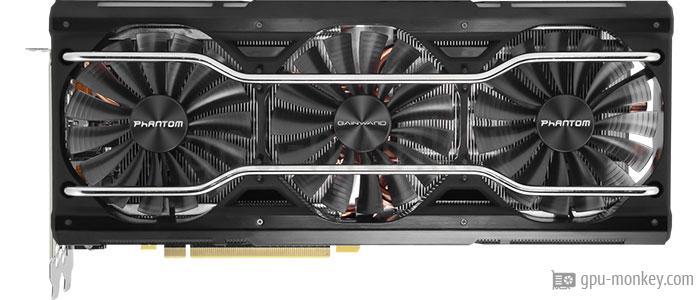
Gainward GeForce RTX 2080 Phantom GS Gainward GeForce RTX 2080 Phantom GS View
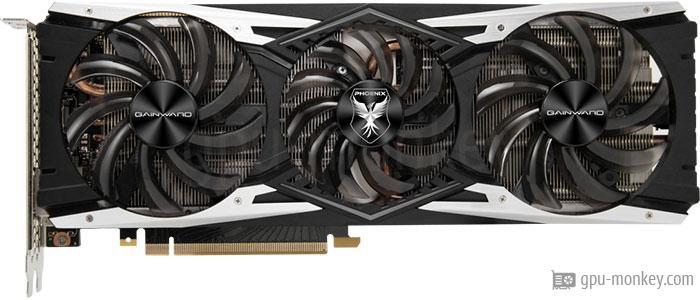
Gainward GeForce RTX 2080 Phoenix GS Gainward GeForce RTX 2080 Phoenix GS View
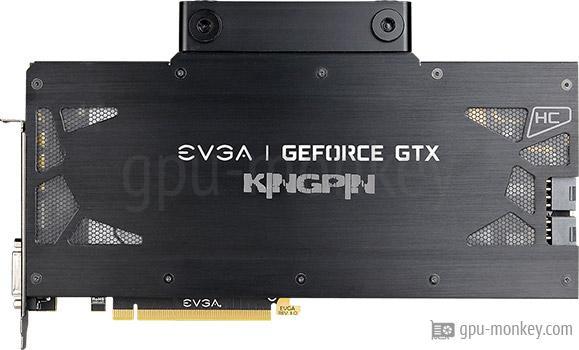
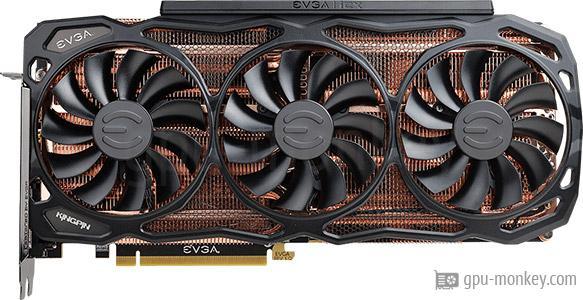
EVGA GeForce GTX 1080 Ti K|NGP|N Hydro Copper GAMING EVGA GeForce GTX 1080 Ti K|NGP|N Hydro Copper GAMING View
EVGA GeForce GTX 1080 Ti K|NGP|N GAMING EVGA GeForce GTX 1080 Ti K|NGP|N GAMING View
Palit GeForce GTX 1080 Ti GameRock Premium Palit GeForce GTX 1080 Ti GameRock Premium View
GIGABYTE AORUS GeForce GTX 1080 Ti 11G GIGABYTE AORUS GeForce GTX 1080 Ti 11G View

*

Base Clock is the base GPU frequency stated by the manufacturer for this model.

Boost Clock describes automatic frequency increases. Actual clock speed varies with workload, temperature and power limits; it is not a guarantee of manual overclocking.

Rate the video card
AMD Radeon Pro VII

Latest comparisons